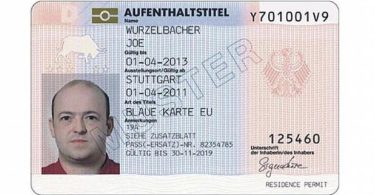
For professionals already working in Germany, bringing close family members to live together legally is a realistic and well-defined option. Germany’s family reunification framework is built around financial stability, lawful residence, and full integration into the country’s social system. The income benchmark around €48,000 annually and strict health insurance requirements are central to approval decisions, making preparation essential.
This pathway is not discretionary or informal. It is regulated, transparent, and designed to ensure families can live independently without relying on public assistance.
What Family Reunification Means in Germany
Family reunification allows legally resident foreign workers to bring immediate family members—typically a spouse and minor children—to Germany. Once approved, family members receive residence permits that allow them to live in Germany and, in most cases, work or study without restrictions.
The underlying principle is sustainability. Authorities assess whether the sponsoring resident can support the family financially and ensure adequate living conditions and insurance coverage.
Understanding the €48,000 Income Threshold
The income requirement is not a fixed universal number but a practical reference point used by immigration authorities. Around €48,000 gross annual income is commonly sufficient for a household with a spouse and one child, though exact requirements vary based on family size, housing costs, and regional standards.
Authorities evaluate net income after taxes and social contributions. The income must comfortably cover rent, utilities, insurance, and living expenses for all family members without reliance on social benefits.
Higher housing costs in major cities may raise the effective income requirement, while smaller cities or regions with lower rent can reduce pressure on earnings.
Who Is Eligible to Sponsor Family Members
The sponsor must hold a valid German residence permit or EU Blue Card and have stable employment. Temporary or probationary contracts may weaken an application unless income stability is clearly demonstrated.
The spouse must be legally married to the sponsor, and in most cases basic German language knowledge is required before entry. Minor children must be unmarried and under the legal age limit.
Adequate living space is mandatory. The home must meet minimum size requirements appropriate for the number of occupants, confirmed through rental contracts or ownership documents.
Health Insurance Rules Explained
Health insurance is a non-negotiable requirement for family reunification. Every family member must be covered from the first day of residence.
If the sponsor is enrolled in Germany’s public statutory health insurance, family members are often included through family insurance at no additional monthly cost, provided income conditions are met.
Where public coverage does not apply, approved private health insurance is required. The policy must provide comprehensive medical coverage equivalent to statutory insurance, including doctor visits, hospital care, and essential treatment.
Travel insurance alone is insufficient. Authorities require long-term medical insurance that complies with German healthcare standards.
Costs to Plan For
Application fees for family reunification visas are moderate. Additional costs may include document translation, certification, and language testing where required.
Relocation expenses include travel, initial accommodation, and possible housing upgrades to meet space requirements. Rental deposits typically equal two to three months’ rent.
Living costs increase with family size, particularly for childcare, education supplies, and daily expenses. These factors are considered during income assessment.
Step-by-Step Application Process
The process begins with confirming eligibility and preparing documentation. The sponsor ensures income and housing requirements are met and secures appropriate insurance coverage.
Family members apply at the German embassy or consulate in their country of residence. Applications are reviewed by local immigration authorities in Germany, who verify income, housing, and insurance compliance.
Once approved, family members enter Germany, register their residence, and receive their residence permits. Work and study rights begin according to permit conditions.
Documents Commonly Required
Applications typically include valid passports, marriage and birth certificates, proof of relationship, and official translations where necessary.
The sponsor provides employment contracts, recent payslips, tax records, proof of accommodation, and health insurance confirmation.
Language certificates for spouses and biometric data are also commonly required. Consistency across documents is essential for smooth processing.
Common Mistakes That Lead to Delays
Underestimating income requirements is a frequent issue. Authorities assess real household expenses, not just gross salary figures.
Inadequate insurance coverage is another common problem. Policies must meet German standards and cover all family members fully.
Incomplete or improperly translated documents often result in extended processing times or requests for additional information.
Legal Considerations After Arrival
Family members receive residence permits linked to the sponsor’s status. Maintaining lawful residence requires continuous insurance coverage and compliance with permit conditions.
Spouses are generally allowed to work without restriction, and children have access to education. Changes in employment or income should be reported where required.
Practical Tips for a Successful Application
Securing stable housing before applying strengthens the case. Providing a clear household budget demonstrating affordability also helps.
Choosing public health insurance where possible simplifies coverage for dependents. Early language preparation for spouses improves approval chances and integration.
Keeping organized financial records supports both the initial application and future permit renewals.
Long-Term Benefits for the Family
Family reunification supports long-term stability. Over time, family members may qualify for permanent residence alongside the sponsor, provided residence and integration requirements are met.
Permanent residence offers unrestricted work rights and stronger social security access. Eventually, eligible residents may apply for citizenship under German law.
For many families, reunification is not just about living together—it is about building a secure future with legal certainty and access to one of Europe’s most stable systems.
Conclusion
Germany’s family reunification visa, with an income benchmark around €48,000 and strict health insurance rules, is a structured and achievable pathway for legally employed residents. Success depends on financial readiness, compliant insurance coverage, and thorough documentation. For those who meet the requirements, it provides a lawful and reliable route to family unity and long-term stability in Germany.